

24 Easy Fine Motor Activities for Toddlers
Fine motor skills are the small movements toddlers make with their hands and fingers. Things like picking up tiny objects, turning pages, using a spoon, drawing, buttoning clothes, and building with blocks all require their little hands and fingers to work together.

The good thing is that you don’t need expensive toys or complicated activities. Many of these activities can be done with things you already have at home.
Related Post: 10 Fun Speech Therapy Activities for Toddler and Preschoolers
24 low-prep fine motor activities your toddler will actually enjoy
1. Threading Big Beads
What you need:
– Large wooden beads
– Pipe cleaner or thick string
How to do it:
– Give your toddler a few large beads and a pipe cleaner.
– Show them how to push the pipe cleaner through the hole.
– Let them make a bracelet, necklace, or simply a long chain.
What they will learn:
– Using both hands together
– Bilateral coordination
– Finger control and concentration
– Patience while completing a task
Start with just a few beads if your toddler is new to threading. A pipe cleaner is often easier to use than floppy string because it stays straight while they work.

2. Playdough Squeezing and Rolling
What you need:
– Toddler-safe playdough
How to do it:
– Let your toddler squeeze, pinch, flatten, and pull the playdough apart.
– Show them how to roll it into balls or long “snakes.”
– Make simple pretend foods together, such as cookies or little fruits.
What they will learn:
– How to use their fingers independently
– Hand strength
– How to control pressure
– Rolling and squeezing movements
– Following simple instructions

3. Sticker Peeling
What you need:
– Large toddler-friendly stickers
– Sheet of paper
How to do it:
– Give your toddler a sheet of stickers and encourage them to peel them off.
– Let them stick the stickers anywhere on the paper at first.
– Once they are comfortable, draw circles or simple shapes and ask them to place the stickers inside them.
What they will learn:
– Finger control
– Hand-eye coordination
– Careful placement
– How to use their fingertips
– Following a simple target

Related Post: 25 Fun Sensory Activities for Toddlers
4. Pom-Pom Transfer
What you need:
– Large pom-poms
– Two bowls
– Toddler-safe tongs or a spoon
How to do it:
Put the pom-poms in one bowl.
– Show your toddler how to pick one up with the tongs.
– Ask them to move it into the empty bowl using the tongs.
– If the tongs are too difficult, let them start with their fingers or a spoon.
What they will learn:
– Gripping and releasing
– Hand strength
– Hand-eye coordination
– Controlled movements
– Concentration

5. Practice Getting Dressed
What you need:
Your toddler’s everyday clothes
How to do it:
– Let your toddler try pulling up their pants or putting on socks.
– Encourage them to push their arms through sleeves.
– Give them extra time to attempt simple fasteners.
What they will learn:
– Using both hands together
– Pulling and gripping
– Coordinating movements
– Dressing skills
– Independence
This is one of the most useful forms of fine motor practice because your toddler is learning a skill they actually need.

6. Tear and Paste Paper
What you need:
– Scrap paper
– Sheet of paper
– Child-safe glue
How to do it:
– Show your toddler how to tear paper into small pieces
– Help them spread glue on the paper.
– Let them place the pieces wherever they want.
What they will learn:
– Using both hands together
– Finger strength
– Picking up small objects
– Placing objects with control
– Following a simple process
You can draw a big circle, heart, or other simple shape and encourage your toddler to cover it with the paper pieces.
7. Build a Block Tower
What you need:
– Large building blocks
How to do it:
– Start by building a small tower together.
– Show them how to place one block on top of another.
– Encourage them to build their own tower.
– Let them knock it down and start again.
What they will learn:
– How to carefully position objects
– Hand-eye coordination
– Grasping and releasing
– Balance
– Patience and persistence

8. Practice Using a Spoon
What you need:
– A toddler-safe spoon
– Bowl of thick food (yogurt or mashed potatoes)
How to do it:
– Let your toddler scoop a small amount of food.
– Encourage them to move the spoon toward their mouth independently.
– Allow them to practice even if some food spills.
What they will learn:
– How to hold a spoon
– Scooping
– Wrist control
– Hand-to-mouth coordination
– Independence during mealtimes

Related Post: 40 Easy indoor Toddler Activities
9. Sponge Squeezing
What you need:
– Clean sponge
– Two shallow containers
– Small amount of water
How to do it:
– Put water in one container and leave the other empty.
– Show your toddler how to soak the sponge.
– Ask them to squeeze the water into the empty container.
– Repeat until they have transferred the water.
What they will learn:
– How to squeeze
– Hand strength
– Opening and closing the fingers
– Controlling pressure
– Transferring objects from one place to another

10. Sticker Matching
What you need:
– Large stickers
– Paper with simple shapes drawn on it
How to do it:
– Draw large circles, squares, or other simple shapes.
– Give your toddler matching stickers.
– Ask them to place each sticker inside the correct shape.
What they will learn:
– Precise hand movements
– Hand-eye coordination
– Matching
– Following instructions
– Staying focused on a small task
Start with large shapes and plenty of space between them.

11. Crayon Scribbling
What you need:
– Thick crayons
– Large sheets of paper
How to do it:
– Give your toddler plenty of space to scribble freely.
– Encourage them to make lines, circles, dots, and zigzags.
– Occasionally ask them to copy a simple line or shape.
What they will learn:
– How to hold a writing tool
– Controlling hand movements
– Making different marks
– Hand-eye coordination
– Early pre-writing skills

12. Clothespin Picking
What you need:
– Large clothespins or toddler-safe clips
– Basket or piece of cardboard
How to do it:
– Show your toddler how to squeeze the clip open.
– Let them attach the clips around the edge of a basket or cardboard.
– Use different colors if you want to introduce a simple matching game.
What they will learn:
– Finger strength
– Pinching
– Opening and closing
– Hand control
– Color matching

13. Water Pouring
What you need:
– Two small cups
– Shallow basin of water
How to do it:
– Fill one cup with a small amount of water.
– Show your toddler how to pour it into the other cup.
– Let them repeat the process and experiment with different amounts.
What they will learn:
– Gripping
– Tilting and controlling a container
– Hand-eye coordination
– Pouring
– Understand full and empty

14. Button Practice
What you need:
An old shirt, cardigan, or dressing board with large buttons
How to do it:
– Show your toddler how to push a button through the opening.
– Let them practice opening and closing one button at a time.
– Encourage them to try more buttons
What they will learn:
– Using both hands together
– Finger coordination
– Patience
– Dressing skills
– Independence
Buttoning takes time. If your toddler can only manage one button today, that’s wonderful.

15. Finger Painting
What you need:
– Washable, child-safe paint
– Paper
How to do it:
– Put a small amount of paint on the paper.
– Let your toddler explore it using their fingers.
– Encourage them to make dots, lines, circles, and swirls.
What they will learn:
– Finger movement
– Hand control
– Making different marks
– Exploring texture

16. Pasta Scooping
What you need:
– Large dry pasta, two bowls
– Toddler-safe spoon or scoop
How to do it:
– Put the pasta into one bowl.
– Ask your toddler to scoop it into another bowl with a spoon.
– Let them continue until they have transferred all the pasta.
What they will learn:
– Holding a spoon
– Scooping
– Wrist control
– Hand-eye coordination

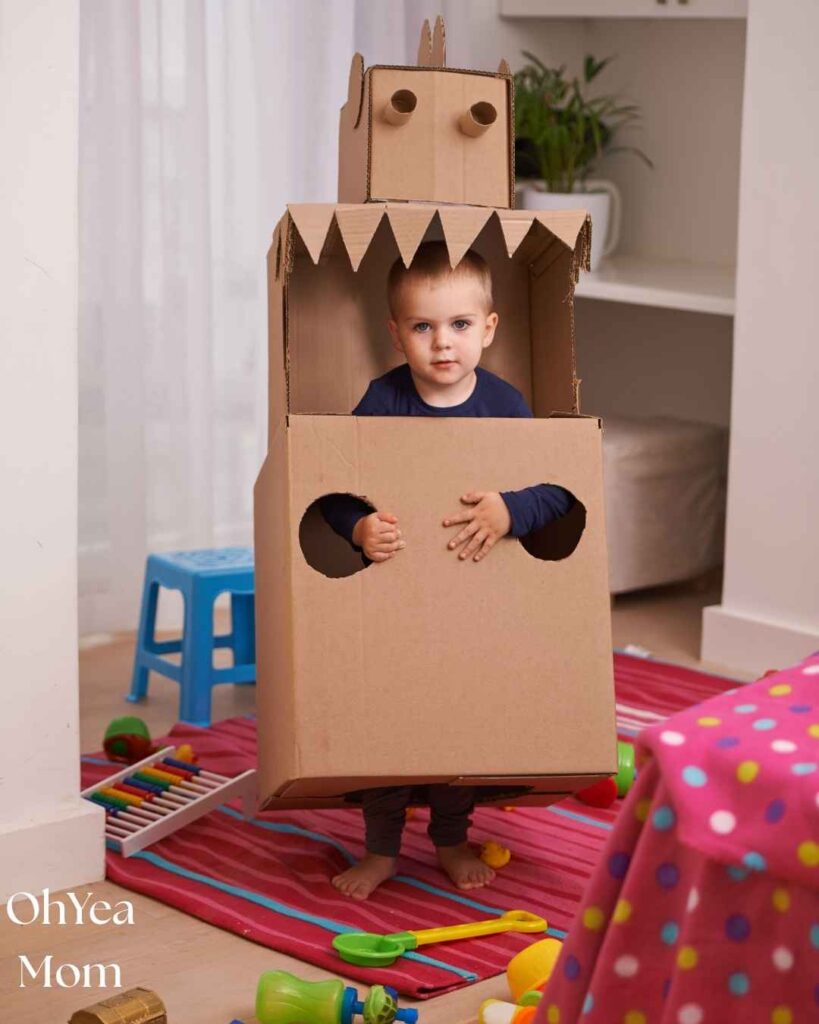
17. Cardboard Monster Feed
What you need:
– Empty cardboard box
– Paper for decorating
– Toddler-safe objects
How to do it:
– Turn the box into a silly monster with a large opening for its mouth.
– Give your toddler the objects and ask them to “feed” the monster.
– Add simple instructions such as, “Can you give the monster the blue one?”
What they will learn:
– Picking up objects
– Controlled releasing
– Hand-eye coordination
– Following directions
– Color recognition
18. Cotton Swab Painting
What you need:
– Cotton swabs
– Washable paint
– Paper
How to do it:
– Put a little paint on a plate.
– Show your toddler how to dip the cotton swab and make dots on the paper.
– Draw a simple shape and ask them to fill it with dots.
What they will learn:
– Using their fingertips
– Controlled movements
– Hand-eye coordination
– Making small marks
– Concentration

19. Opening and Closing Containers
What you need:
– Clean containers with different types of lids
How to do it:
– Give your toddler several containers to explore.
– Let them practice opening, closing, twisting, and snapping the lids.
– Ask questions such as, “Can you open this one?”
What they will learn:
– Gripping
– Twisting
– Pulling
– Pushing
– Problem-solving

20. Homemade Lacing
What you need:
– Piece of sturdy cardboard
– Large punched holes
– Thick shoelace
How to do it:
– Punch several large holes around the edge of the cardboard.
– Show your toddler how to push the lace through a hole.
– Let them continue around the cardboard at their own pace.
What they will learn:
– Using both hands together
– Finger control
– Following a sequence
– Hand-eye coordination
– Patience
21. Tear Lettuce for Lunch
What you need:
– Soft lettuce
How to do it:
– Give your toddler a Lettuce tear into smaller pieces.
– Let them place the pieces into a bowl.
– Talk to them about what you’re preparing together.
What they will learn:
– Using both hands
– Finger strength
– Grasping
– Tearing
– Helping with everyday tasks

22. Coin or Token Drop
What you need:
– Container with a narrow slot
– Large toddler-safe tokens
How to do it:
– Give your toddler one token at a time.
– Show them how to line it up with the opening.
– Let them push it through and retrieve it to try again.
What they will learn:
– Precise hand movements
– Hand-eye coordination
– Grasping and releasing
– Problem-solving
– Concentration

23. Scissor Practice
What you need:
– Toddler-safe scissors
– Strips of paper
How to do it:
– Show your toddler how to open and close the scissors.
– Let them make small cuts along a strip of paper.
– Once they are comfortable, draw thick lines for them to follow.
What they will learn:
– Opening and closing scissors
– Hand strength
– Hand-eye coordination
– Following a line
– Controlled movements

24. Bath-Time Scooping
What you need:
– Scoops
– Containers
How to do it:
– Give your toddler different containers during bath time.
– Let them scoop, fill, pour, and empty the water.
– Encourage them to transfer water from one cup to another.
What they will learn:
– Gripping and lifting
– Scooping
– Pouring
– Controlling their hands
– Understanding full and empty
Always stay within arm’s reach during water play.


